by Corinne McKenna | Oct 1, 2026 | blog
A weekly idea-gathering routine gives your lawyers a steady supply of thought leadership topics for LinkedIn posts and editorial articles. Collect questions, disagreements, legal changes and primary data, then test each candidate for audience relevance, evidence and a...
by Corinne McKenna | Aug 31, 2026 | blog
If you are a law firm partner or barrister using AI in practice, you need a written AI governance policy that names who signs off on new tools, sets out how you supervise AI output, and proves you have met your competence and confidentiality duties. This applies in...
by Corinne McKenna | Aug 18, 2026 | blog
From 2nd August 2026, every large language model provider selling into the European Union must embed a hidden, machine-readable mark in the text, audio, images, and video their systems generate. The obligation stems from Article 50(2) of the EU AI Act. Existing LLMs...
by Corinne McKenna | Jul 29, 2026 | blog
To compete effectively, you should plan to spend between 5% and 10% of your gross fee income on marketing if you run a small firm of one to five fee earners, rising toward 15% for a defined growth push such as a new practice area or location. This applies across...
by Corinne McKenna | Jul 3, 2026 | blog
A well-constructed prompt for a legal article combines seven elements: role, context, task, output format, examples, constraints, and instructions. Law firms in England and Wales that master this structure produce first drafts that need less editing, carry lower...
by Corinne McKenna | Jun 19, 2026 | blog
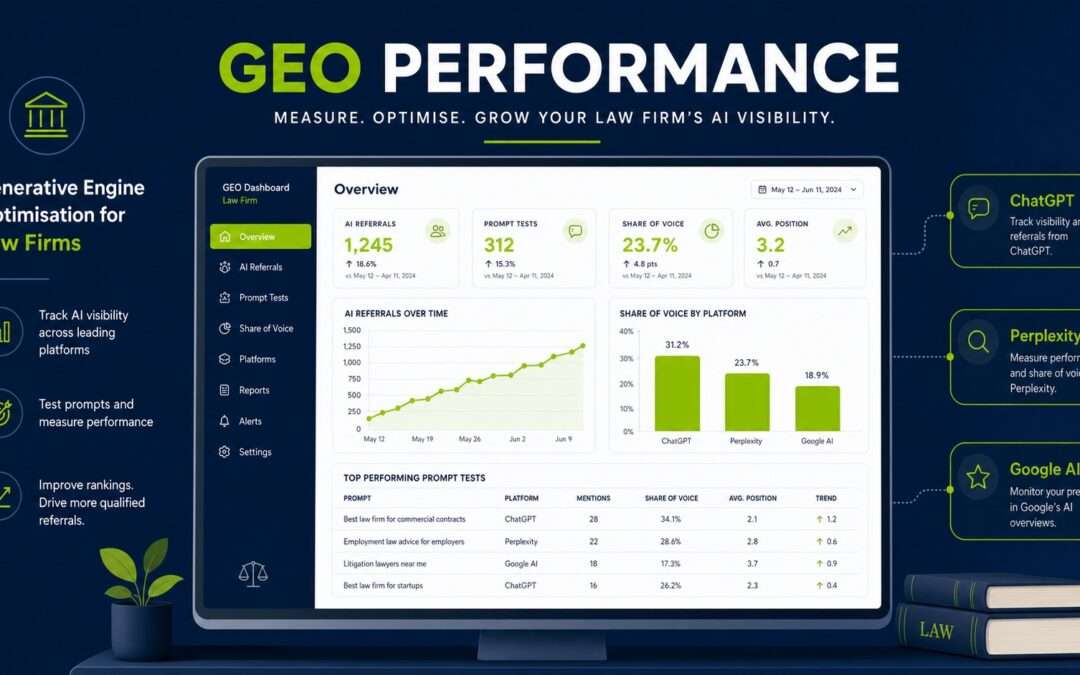
Track GEO by running regular manual prompt tests across ChatGPT, Perplexity, Gemini, and Google AI Mode; monitoring AI referral traffic in Google Analytics; and, if budget allows, using a dedicated AI monitoring tool. Connect changes in these metrics to content and...