by Corinne McKenna | Jul 29, 2026 | blog
To compete effectively, you should plan to spend between 5% and 10% of your gross fee income on marketing if you run a small firm of one to five fee earners, rising toward 15% for a defined growth push such as a new practice area or location. This applies across...
by Corinne McKenna | Jul 3, 2026 | blog
A well-constructed prompt for a legal article combines seven elements: role, context, task, output format, examples, constraints, and instructions. Law firms in England and Wales that master this structure produce first drafts that need less editing, carry lower...
by Corinne McKenna | Jun 19, 2026 | blog
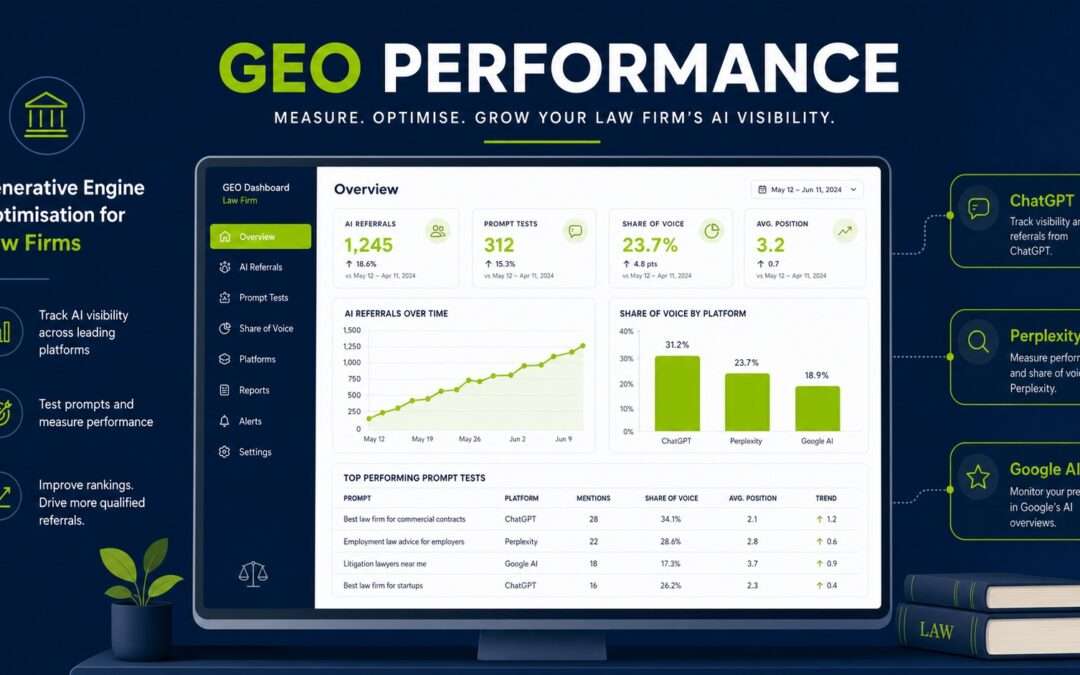
Track GEO by running regular manual prompt tests across ChatGPT, Perplexity, Gemini, and Google AI Mode; monitoring AI referral traffic in Google Analytics; and, if budget allows, using a dedicated AI monitoring tool. Connect changes in these metrics to content and...
by Corinne McKenna | Jun 18, 2026 | blog
AI systems cite sources they trust. Build trust by credentialing your authors visibly, maintaining factual accuracy, earning external mentions from reputable sources, and keeping content up to date. Trust signals are the infrastructure that structural improvements...
by Corinne McKenna | Jun 18, 2026 | blog
Content structure is one of the most direct levers available for improving AI citation performance. How you organise information, how quickly you answer questions, and how clearly you signal the purpose of each section all influence whether AI systems extract and cite...
by Corinne McKenna | Jun 15, 2026 | blog
GEO for law firms means making your content the source AI tools want to cite. Write authoritative, well-structured content that answers real questions directly, implement schema markup, build genuine authority signals across the web, and monitor where you appear in...